

Tortoise Talk: Prickly Pear Cactus (Opuntia spp.)
Quick Facts:
Beginner Friendly
Native to Arizona
Safe for Desert Tortoise Consumption (no spines and in moderation)
Pollinator Friendly
Drought Tolerant
Grows in Arizona Full Sun
Low Water Use
Produces Edible Fruits
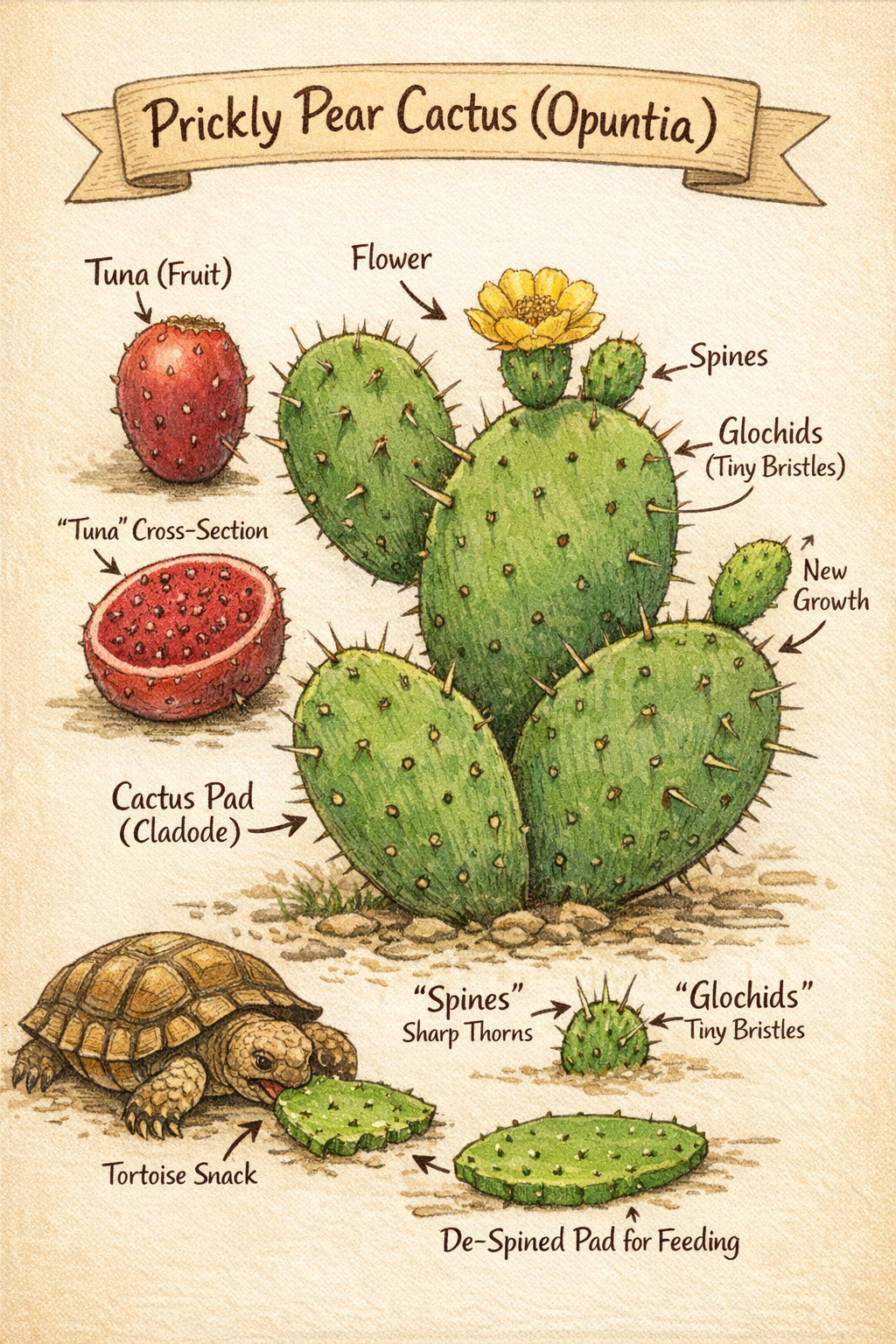
Figure: Prickly Pear Cactus (Opuntia spp.) Poster
Common Name: Prickly Pear Cactus
Scientific Name: Opuntia spp.
Other Names:
Nopal Cactus
Paddle Cactus
Nopales (when referring to the edible pads - Note: these can be found in the produce section of some grocery stores fresh and despined)
Tuna Cactus (when referring to the fruit)
Plant Type: Cactus
Native Status: Native to the Sonoran Desert and much of the American Southwest including Mexico
Plant Family: Cactaceae
Survives in USDA Zones: 8 - 11
Phoenix, AZ USDA Zone General Range: 9b - 10a
Tucson, AZ USDA Zone General Range: 9a - 9b
Size at Maturity: Varies by species; typically growing to somewhere between 2-8 feet tall & wide
Sun Requirements: Full sun - Even Arizona full sun
Water Requirements: Very low
Growth Rate: Slow to moderate depending on variety.
Flower Color: Varies by species: Yellow / Orange / Pink / Red
Bloom Season: Spring to early summer with some varietals only blooming for as little as an 8 - 12 hour window rather than a continuous flower for days on end.
Fruit: Produces colorful edible fruits commonly called “tunas” which are edible and may be harvested for raw consumption or used in making jams, syrups and even candies.
Wildlife Value: Pollinators such as native bees and butterflies enjoy the flowers that these cactus produce while the birds eat the fruit that the cactus produces. There are also commonly small reptiles such as lizards that use the cactus for both protection and as a source of food.
Tortoise Talk:
The AZDGF has a list of plants that tortoises have been observed eating in the wild and in captivity. They state that there are more plants missing from the list as the list itself is vast, but that tortoises instinctively know that what plants to avoid and make them sick - this does not mean offer plants you knowingly might make them ill.
If you would like to download the entire list AZDGF has available, I encourage you to visit their website’s free downloadable brochure under the Care For A Desert Tortoise section.
According to the brochure, Prickly Pear Cactus (Opuntia spp.) is listed as a safe plant to offer desert tortoises, including both the pads, flowers and fruit. While edible, prickly pear is generally not recommended for placement directly inside a tortoise enclosure, as spines may cause injury if a tortoise bumps into the plant.
Why We Like It:
Few plants are as iconic to the Sonoran Desert as Prickly Pear Cactus. Numerous species occur naturally across the state, from lower desert environments to higher elevation grasslands and foothills. Its ability to withstand drought makes it an excellent choice for water-conscious landscapes. It thrives in Arizona’s intense heat, requires little maintenance once established, and provides year-round interest through its unique pads, colorful flowers, and vibrant fruit.
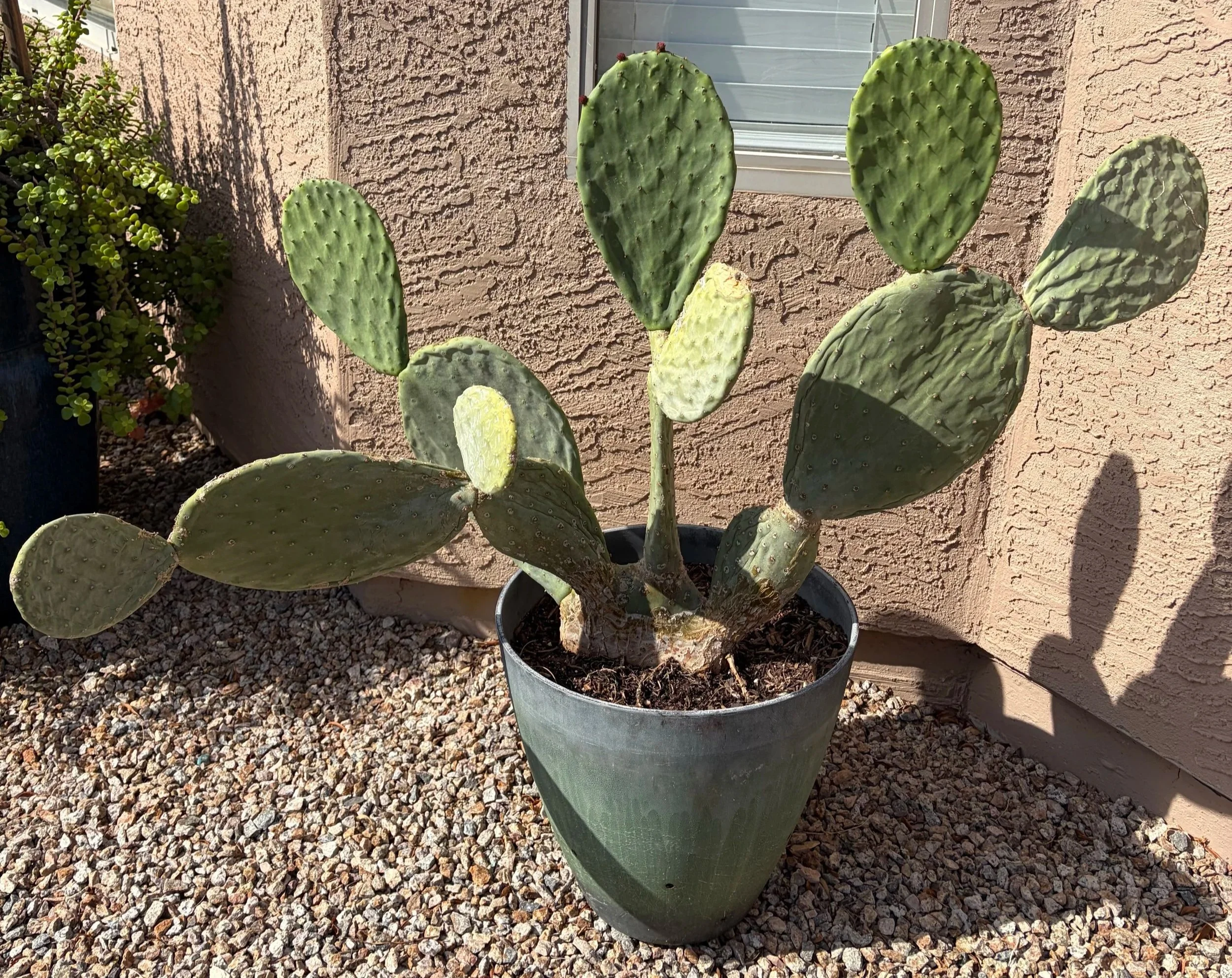
Figure: Prickly Pear Cactus (Opuntia spp.) Potted Plant
Things To Know:
Use caution when handling as those little hairs are often more troublesome than the larger spines.
Pads can be propagated easily by allowing a cut pad to callous over for a few days before planting.
If planting, choose loose, well-draining sandy loam as they are cactus and as such, they thrive in soil with a balanced mixture of sand, silt, and clay that is heavily amended with rocky minerals to ensure water never pools around their root system which can rot them out.
Fruit can attract wildlife when ripe if not picked.
Mature plants create excellent visual anchors in desert-themed landscapes.
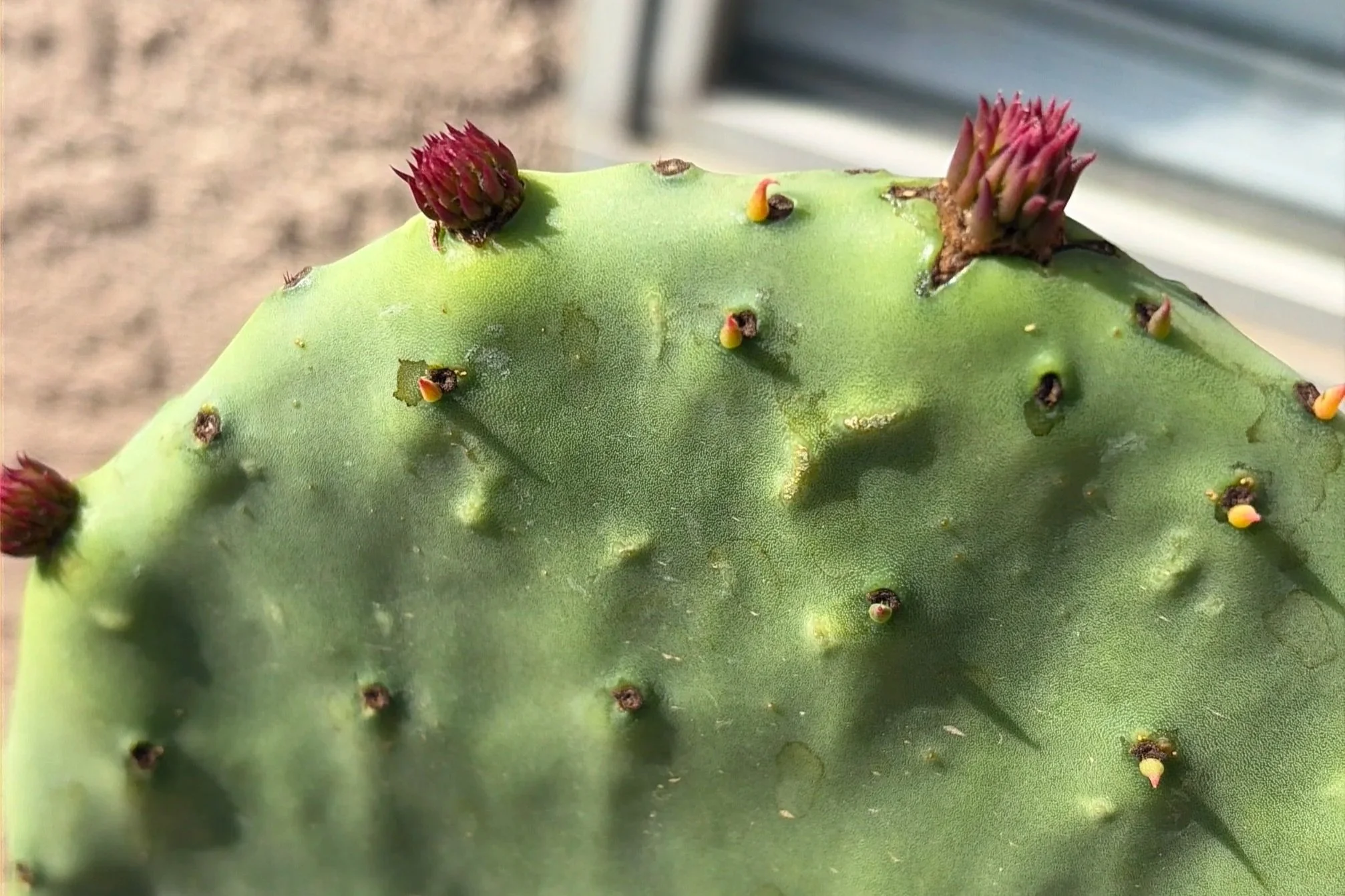
Figure: Prickly Pear Cactus (Opuntia spp.) New Growth
Further Reading / References:
Arizona Sonora Desert Museum - https://www.desertmuseum.org/kids/oz/long-fact-sheets/Prickley%20Pear.php
California Turtle & Tortoise Club - https://www.tortoise.org/cttclink.html
Encyclopedia Britannica - https://www.britannica.com/plant/Opuntia
Gardenia - https://www.gardenia.net/plant/opuntia-humifusa-eastern-prickly-pear
Spineless Prickly Pear - https://www.opuntiads.com/opuntia-laevis/
The Old Farmer’s Almanac - https://www.almanac.com/plant/how-grow-prickly-pear-cactus-indoor-outdoor-care-tips
Tortoise Forum - https://tortoiseforum.org/threads/prickly-pear-fruit.39154/
Tortoise Forum - https://tortoiseforum.org/threads/prickly-pear-prep.158908/
Tortoise Forum - https://tortoiseforum.org/threads/prickly-pear-fruit-for-desert-tortoise.217019/
Tortoise Group - https://tortoisegroup.org/planting-prickly-pear-pads-for-tortoises/
The Tortoise Table - https://www.thetortoisetable.org.uk/plant-database/viewplants/?plant=262&c=3
USGS - https://www.usgs.gov/media/images/male-desert-tortoise-eating-beavertail-prickly-pear
Related Plants:
Beavertail Cactus (Opuntia basilaris)
Engelmann’s Prickly Pear (Opuntia engelmannii)
Chain Fruit Cholla (Cylindropuntia fulgida)
Hedgehog Cactus (Echinocereus spp.)